RepCheck
Scan reputations before they become headlines.
RepCheck — AI-Powered Reputation Risk Platform
I designed RepCheck, a desktop app to help agencies and brands screen public figures' online content for reputational risks.
Timeline:
2 weeks
Tools:
Figma, Figjam
Roles:
UX/UI Designer, UX Researcher
Client:
Jason Ikokwu
The Solution-Lo-fi Prototype
A desktop tool that turns digital history into decision-ready insight.
RepCheck helps agencies scan a public figure’s online presence, flag risky content, and generate clear reports; so teams can assess endorsement safety before anything goes live.
The Problem
Manual screening can’t keep up.
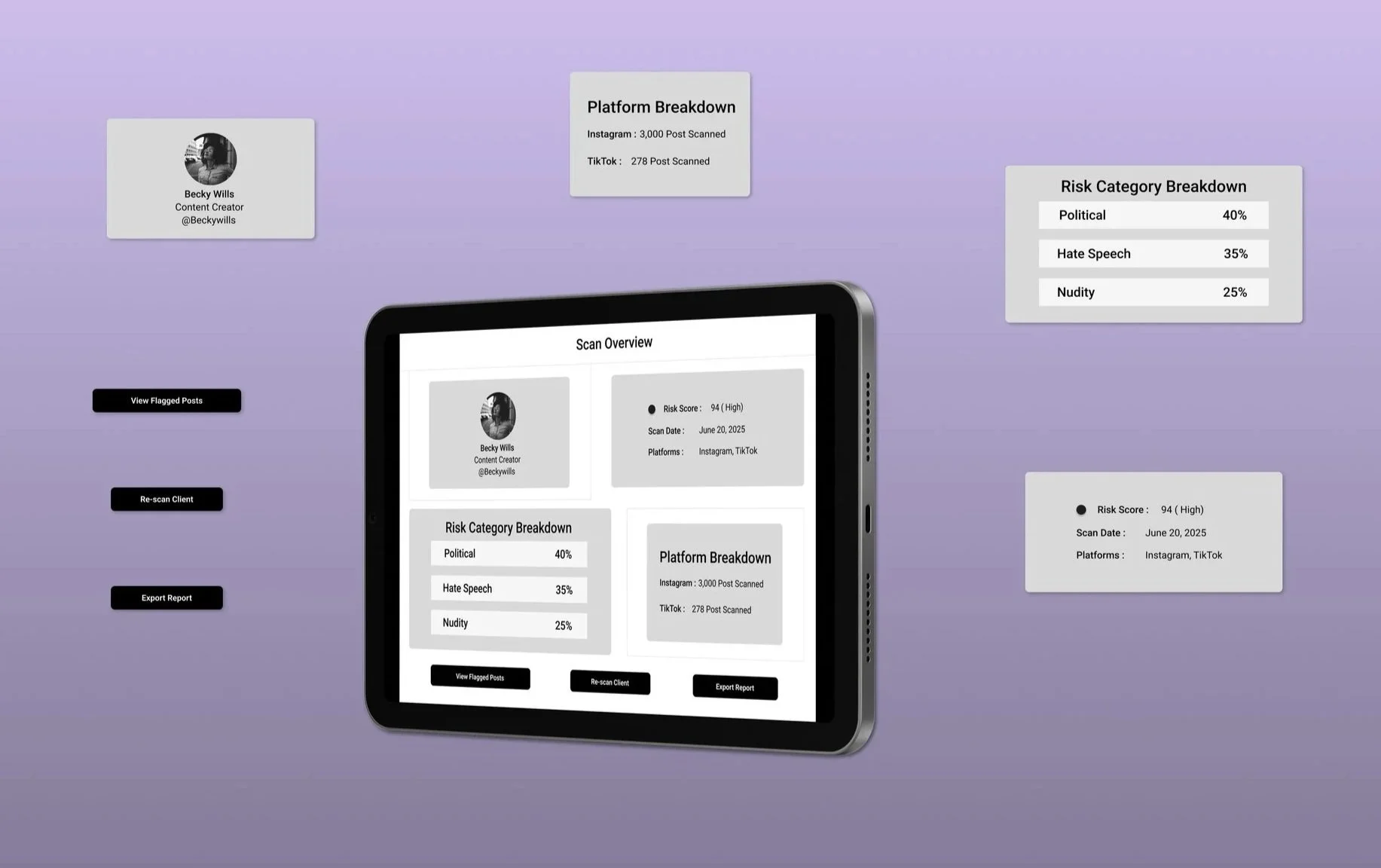
Agencies are stuck scrolling through thousands of posts across platforms; hoping they don’t miss the one that becomes tomorrow’s headline.
Key challenges included:
No centralized way to assess reputational risk
Inconsistent standards for what constitutes “risky” content
Difficulty turning findings into clear, shareable reports
Target Users
Designed for teams who can’t afford surprises.
PR Teams:
Communications professionals tasked with protecting brand reputation and managing public perception.
Brand Managers:
Individuals overseeing partnerships and endorsements who need confidence that a public figure aligns with brand values.
Talent Agencies:
Agencies representing public figures and responsible for vetting past digital activity before securing opportunities.
Target User’s Pain Point
The risk isn’t just content ; it’s time, volume, and uncertainty.
These pain points informed the need for a centralized, AI-powered tool that enables faster screening, clearer risk visibility, and actionable reporting.
Manual review doesn’t scale with years of content.
Deleted posts can still resurface through screenshots or reposts.
Risk standards vary by campaign and brand.
Findings are hard to organize into decision-ready output.
Teams need a fast way to move from “flagged” to “approved / not approved”.
Task Flow
Opportunity For Design.
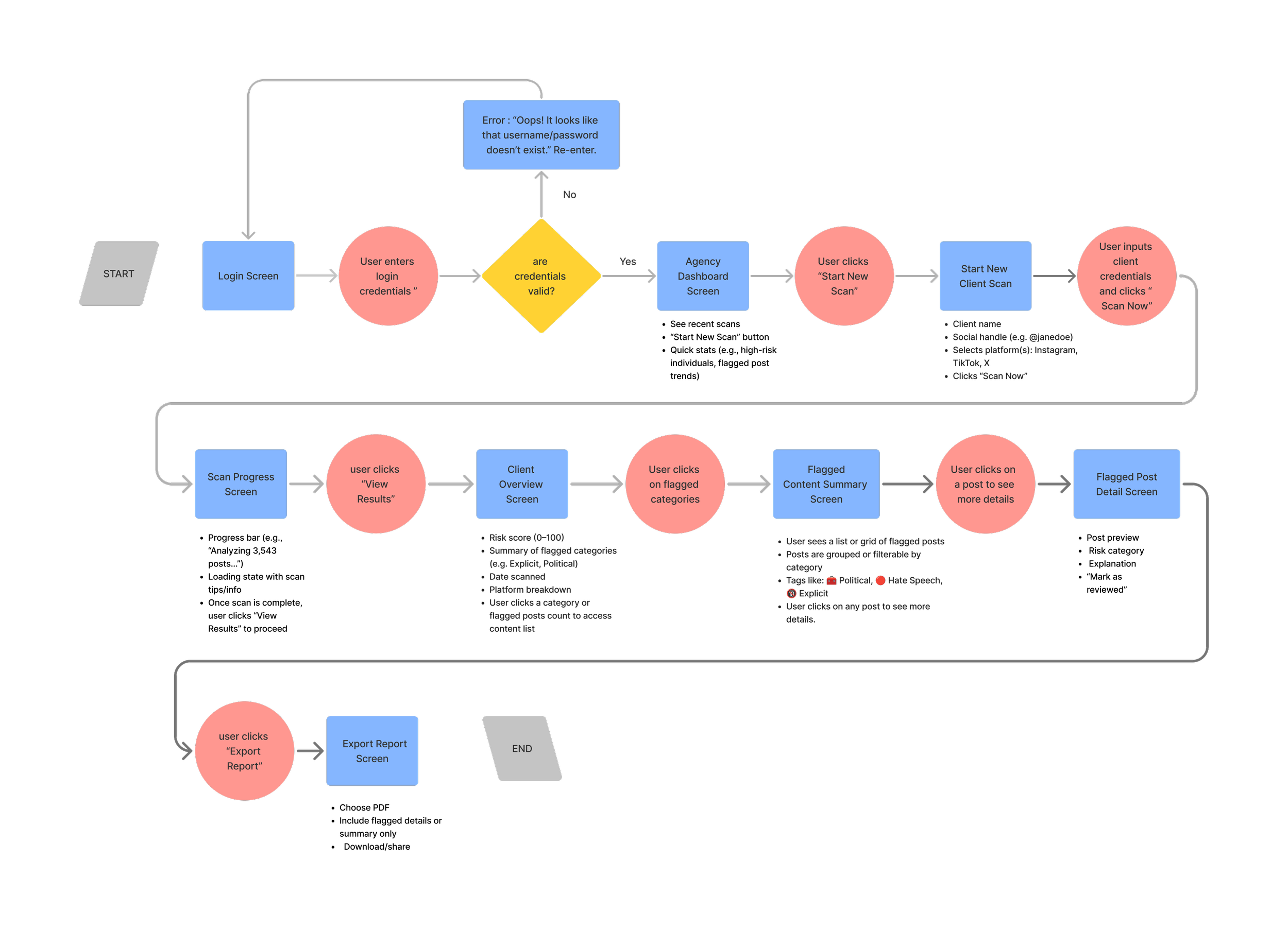
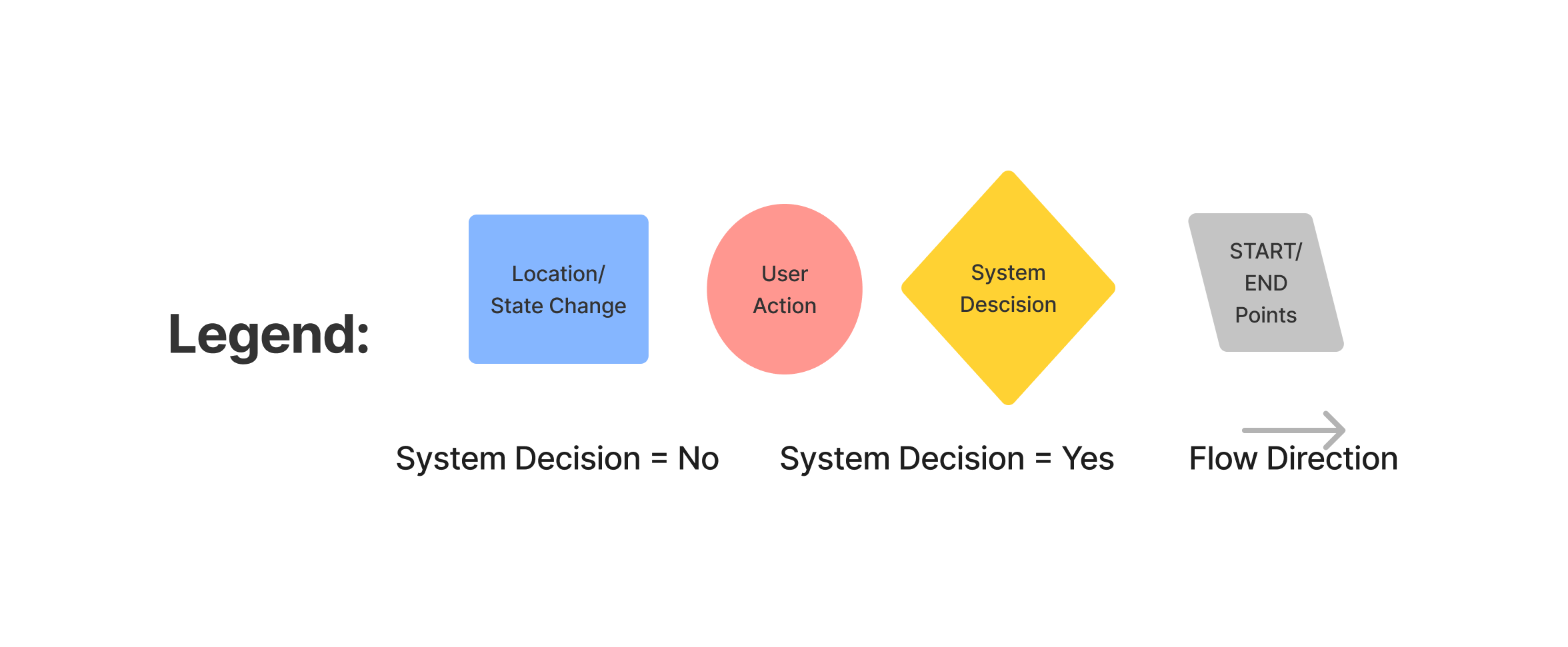
Scan → Review → Export.
Epic : Scan and Review Client Risk
As an agency user, I want to scan a public figure and assess their reputational risk based on their social media content, so that I can decide whether they are safe to endorse.
RepCheck’s core workflow supports one main goal: helping agencies assess reputational risk quickly and confidently.
Target User’s Pain Point
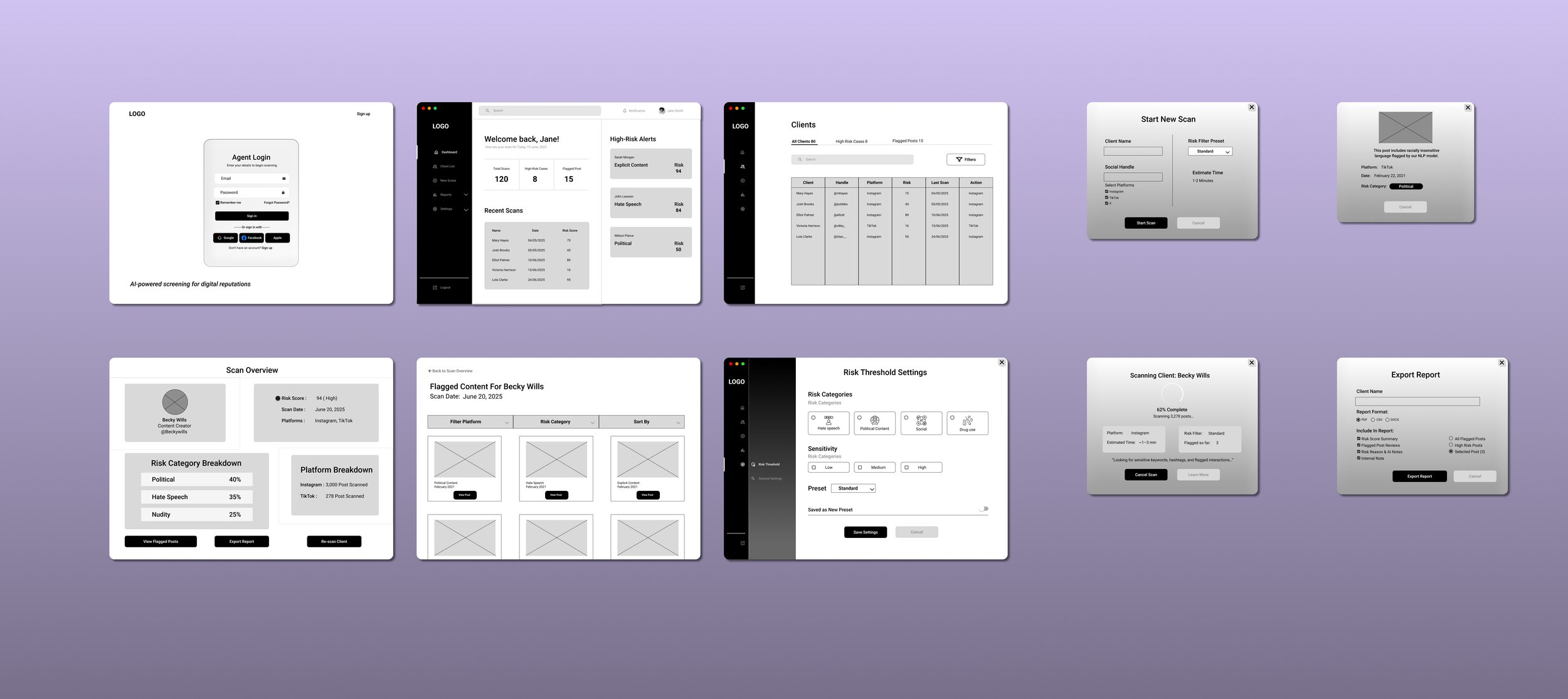
Designing the core foundation in 10 screens.
With a tight timeline, I prioritized clarity, scalability, and decision-making speed across the product experience.
usability testing
Where users hesitated — and what I fixed.
With the help of 5 participants , I conducted usability testing and gather feedback.
Key Findings
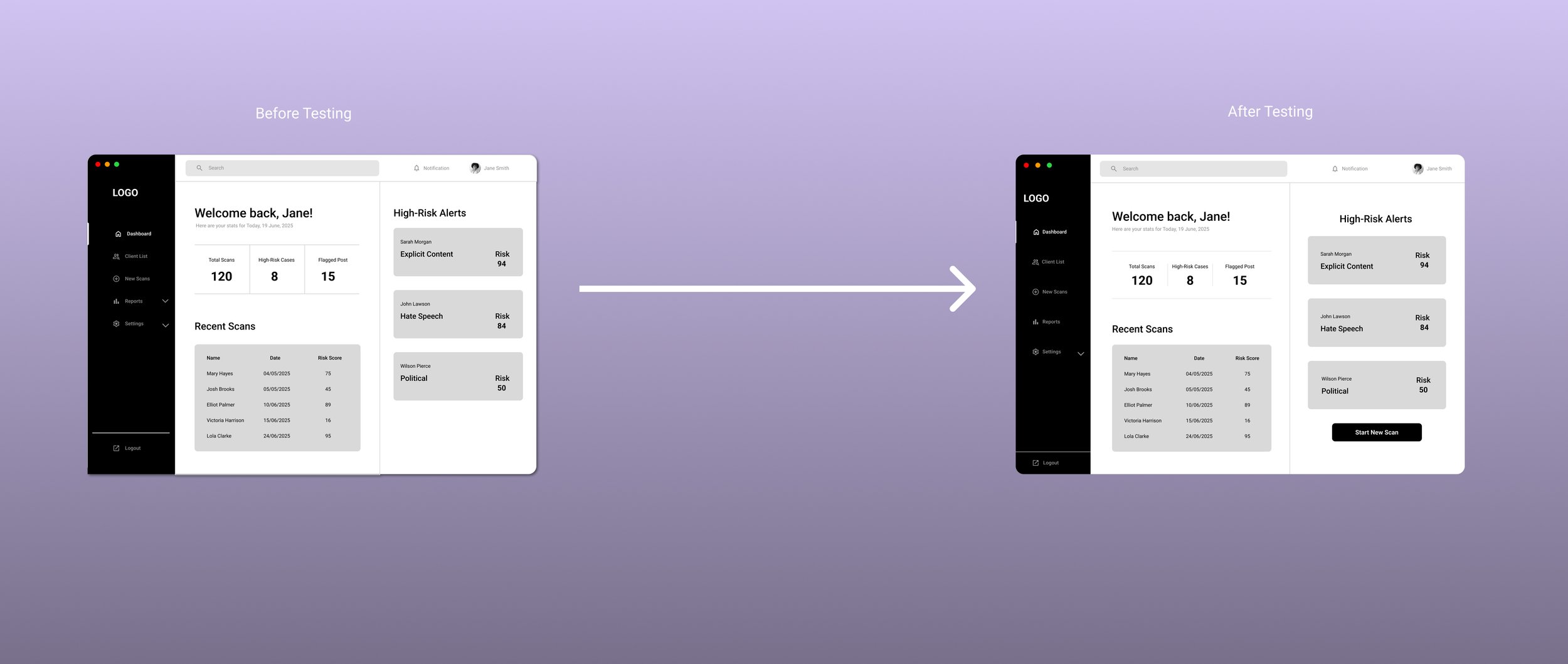
Dashboard: Users weren’t sure where to start a new scan since the option was only in the sidebar. I added a clear “Start New Scan” CTA on the dashboard.
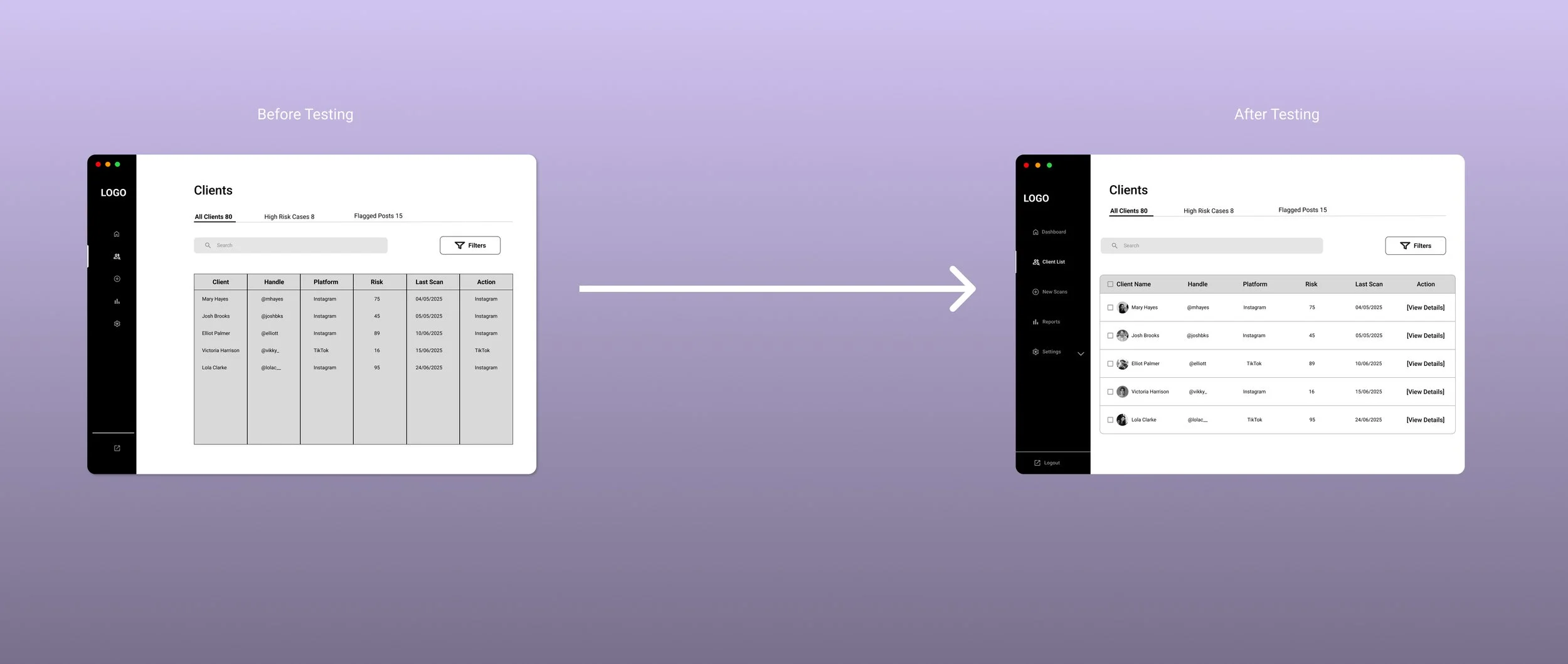
Client List: Users wanted client profile photos for faster recognition and a more responsive search/filter experience to quickly find clients.
Verification: Users requested clearer trust signals, including a way to verify the correct influencer account and link RepCheck results directly to their social profile.
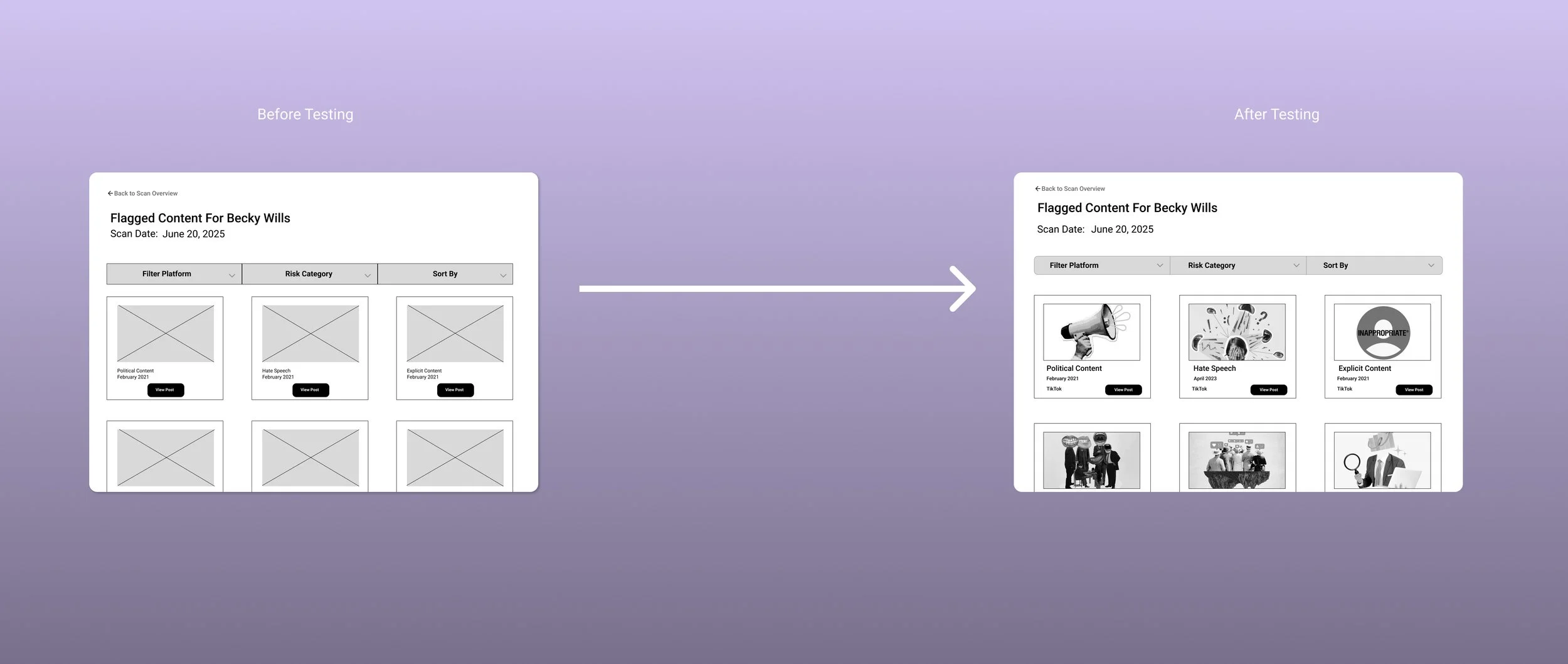
Flagged Content: Users wanted the platform name/icon displayed on each flagged item so it’s immediately clear where the content originated (e.g., Instagram, TikTok, X).
Iteration : Before & After
Small changes. Big clarity.
Low-Fi Prototype
A clickable experience built for stakeholder review.
To support fast alignment and developer handoff, I created an interactive low-fidelity prototype that demonstrated the full end-to-end flow.
Constraints
Built for speed and stakeholder alignment.
1-week sprint timeline to support stakeholder presentation and developer handoff.
No direct access to AI model logic or datasets.
Focused on scalable UX structure over final visual polish.
Outcome & Learnings
Designed for high-stakes decisions — under pressure.
In one week, I delivered the task flow, wireframes, and interactive prototype for RepCheck to support stakeholder review and developer handoff.
This project strengthened my ability to:
Design complex, data-heavy desktop applications.
Translate abstract AI concepts into clear, usable interfaces.
Balance transparency, usability, and trust in high-stakes workflows.
Lead end-to-end UX design from task flow to interactive prototype.